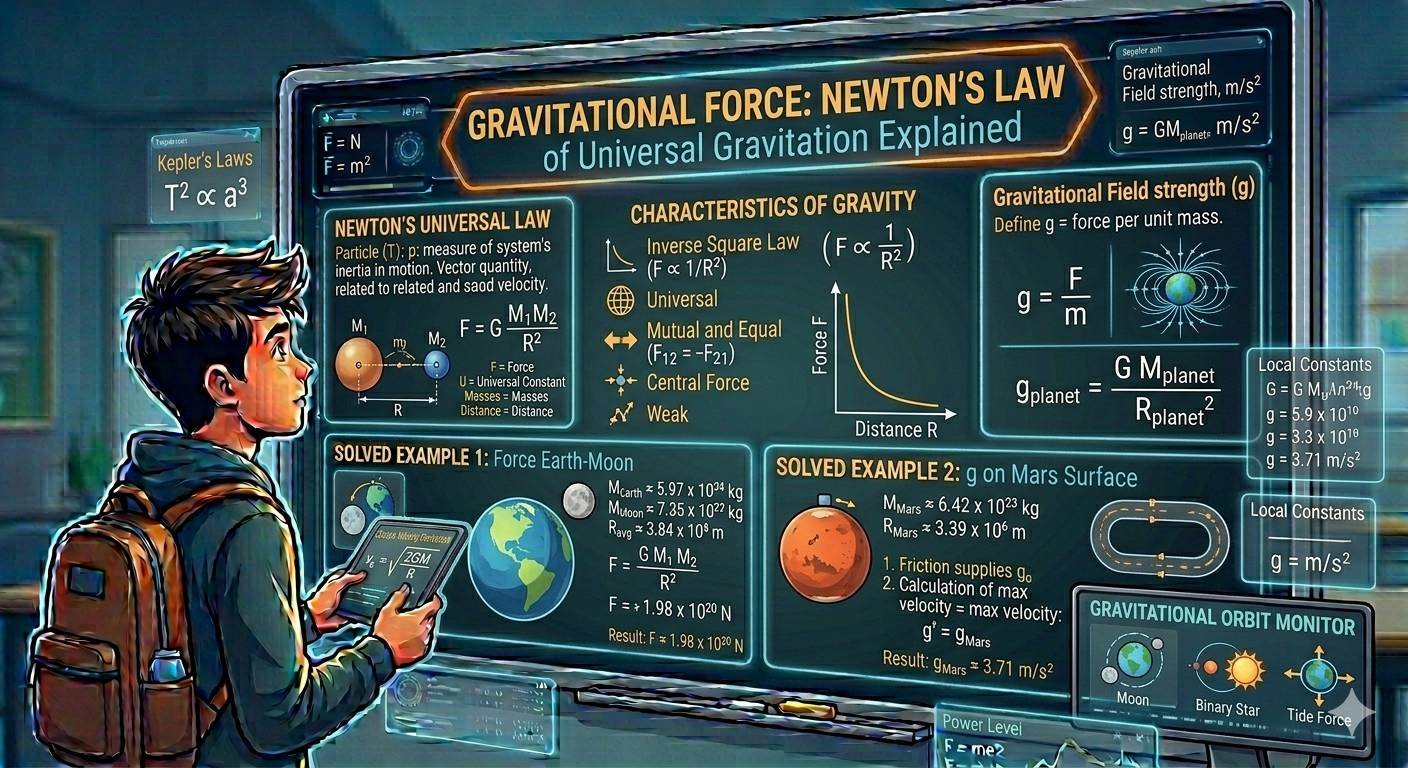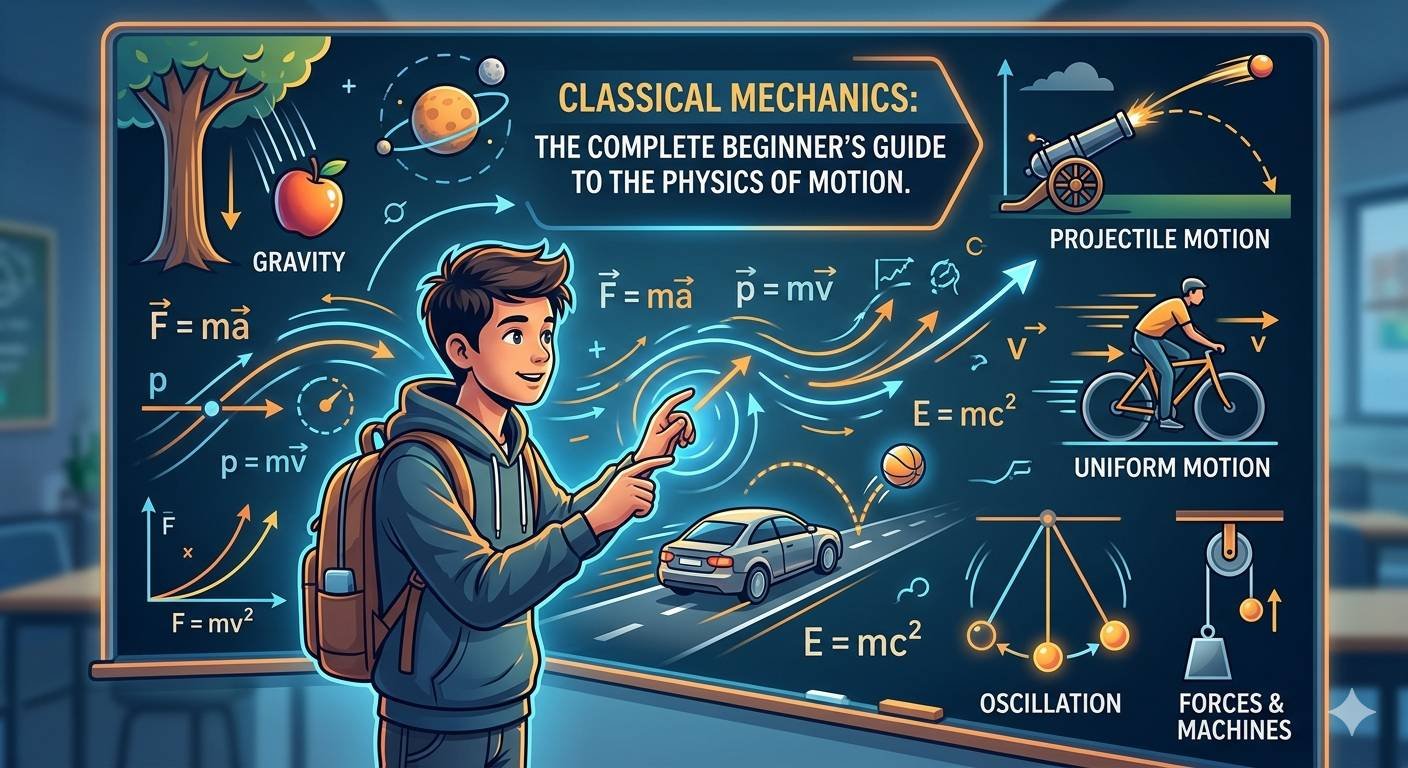
Gravitational Force: Newton’s Law of Universal Gravitation Explained

Gravitational Force Newton’s Law of Universal Gravitation Explained

Newton’s law of universal gravitation states that every object in the universe attracts every other object with a force proportional to the product of their masses and inversely proportional to the square of the distance between them. This single law explains why apples fall, why the Moon orbits, and why galaxies hold together. Gravity is … Read more

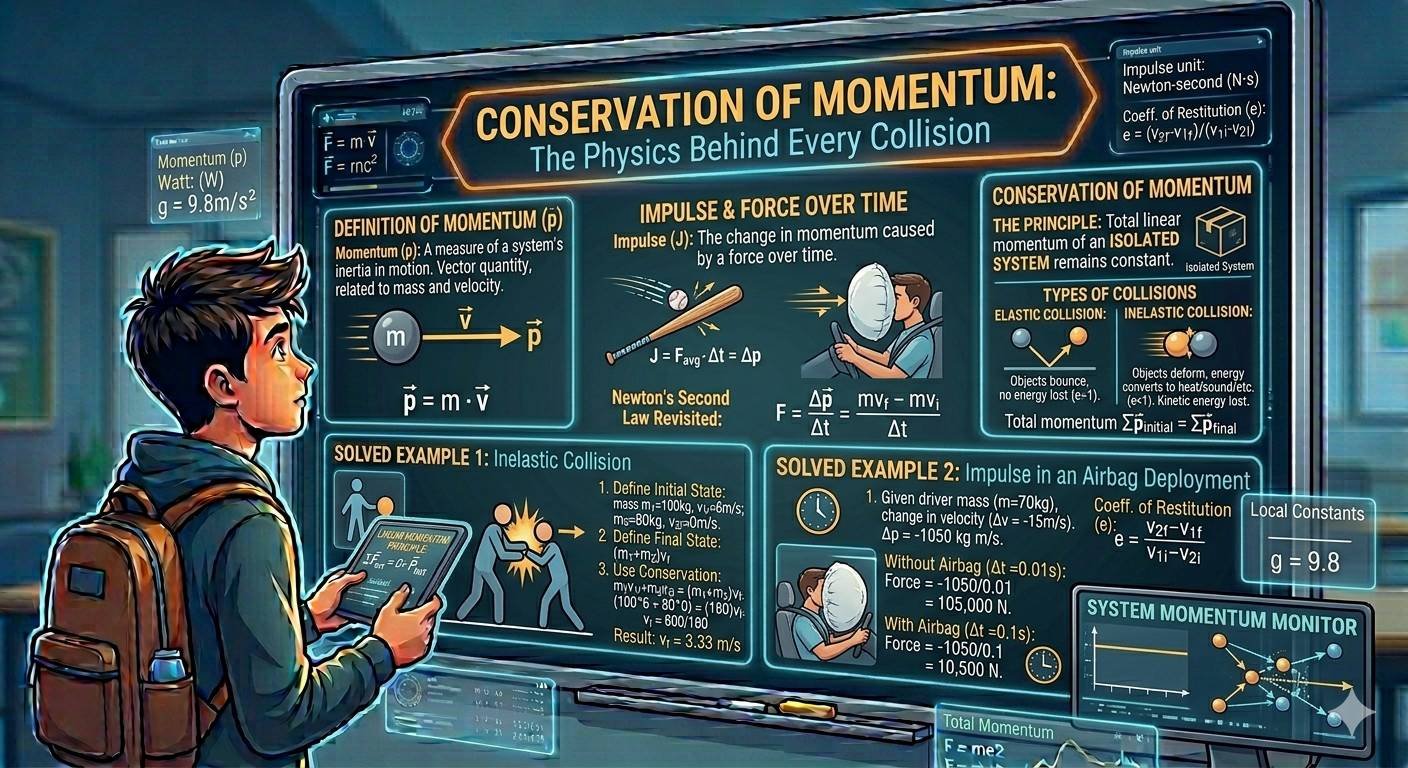
Conservation of Momentum: The Physics Behind Every Collision

Conservation of Momentum

Conservation of momentum states that in an isolated system (no external forces), the total momentum before an event equals the total momentum after. This law governs every collision, every explosion, and every interaction between objects — from billiard balls to car crashes to rocket launches. Momentum is the “quantity of motion” — it combines how … Read more

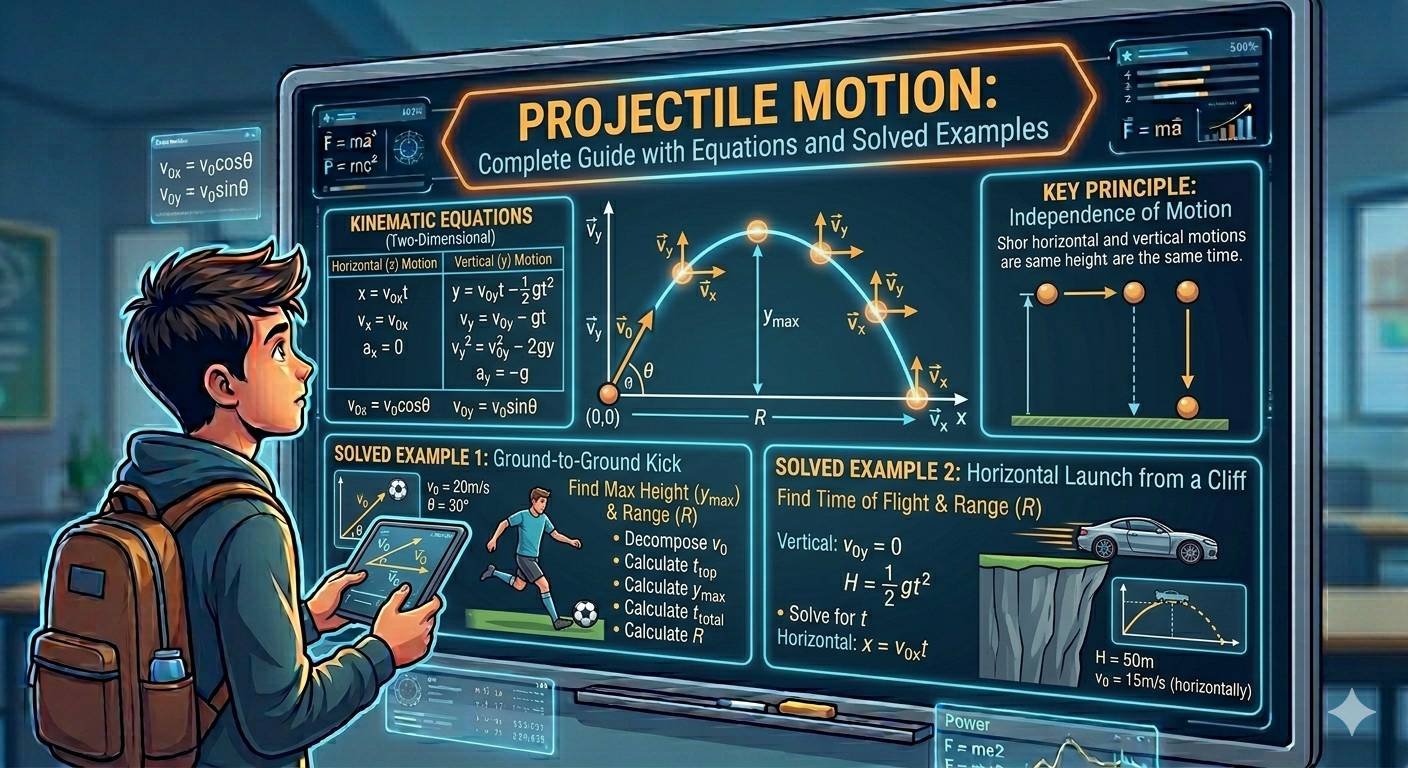
Projectile Motion: Complete Guide with Equations and Solved Examples

Projectile Motion

Projectile motion is the curved path an object follows when launched into the air and acted upon only by gravity. The trajectory is always a parabola (when air resistance is ignored), and the key to solving any projectile problem is treating horizontal and vertical motion as completely independent. Whether you are analyzing a basketball shot, … Read more

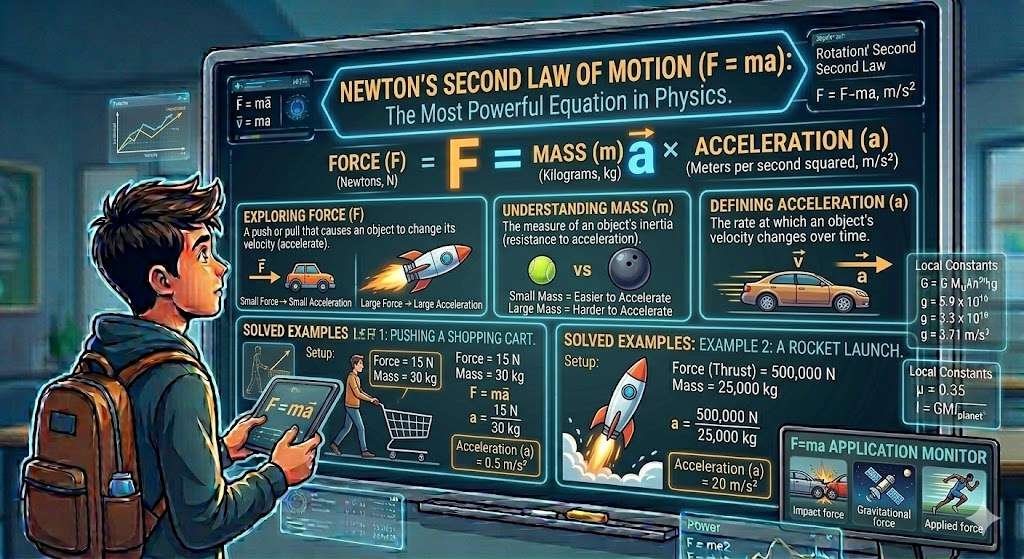
Newton’s Second Law of Motion (F = ma):

Newton’s Second Law of Motion (F = ma) The Most Powerful Equation in Physics

Newton’s second law states that the net force acting on an object equals its mass times its acceleration. In equation form: F = ma. This single equation is the mathematical engine of all classical mechanics — it lets you predict exactly how any object will move when forces act on it. If the first law … Read more